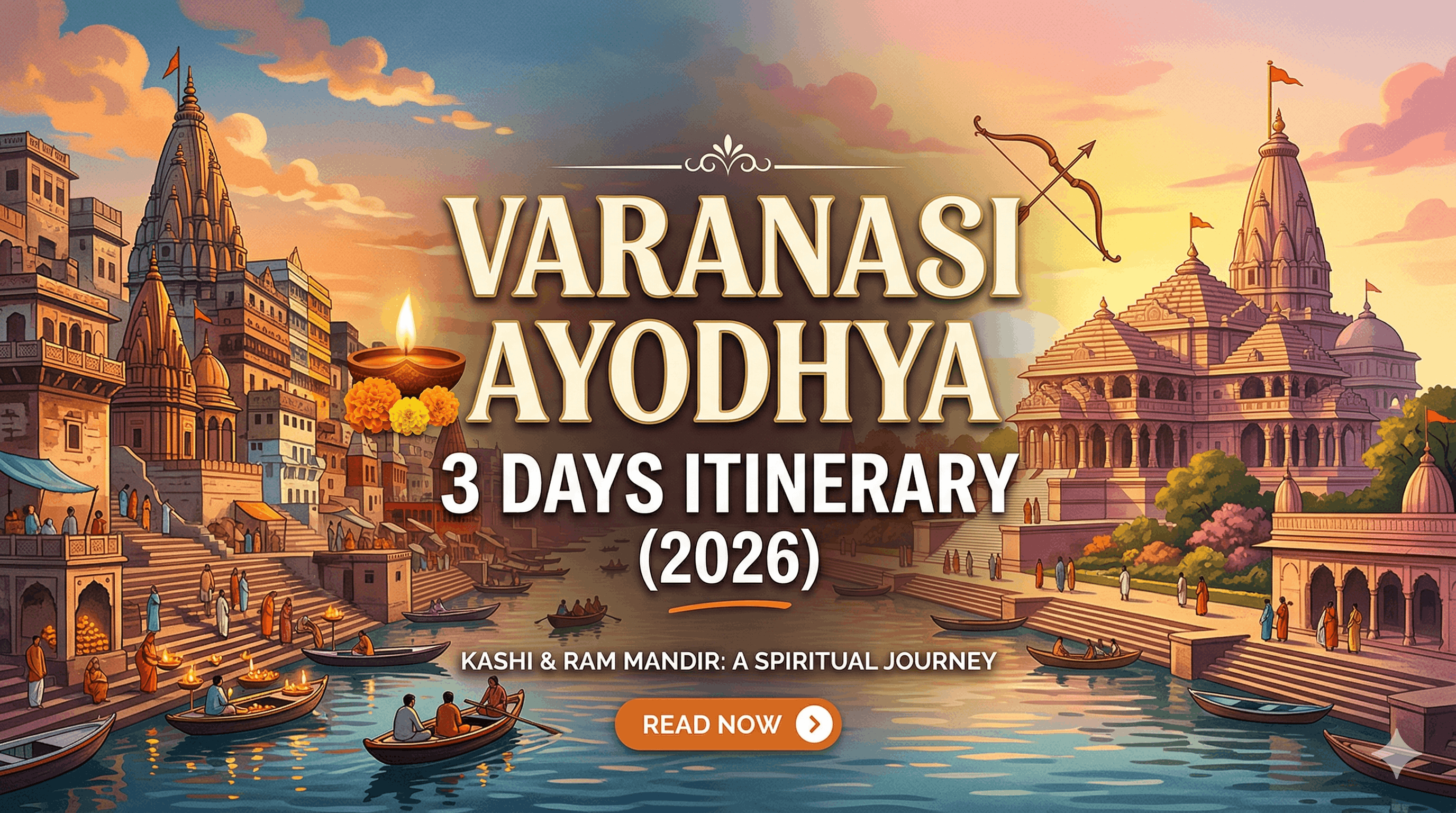
Best Time to Visit Varanasi: Month-by-Month Guide for Every Type of Traveller
Varanasi (Kashi/Banaras) is a city for all seasons — its ancient soul remains unchanged whether the Ganga sparkles under winter sunshine or monsoon rains drench the ghats. However, the best time to visit Varanasi depends significantly on your purpose, tolerance for heat or cold, and whether you want to experience one of its legendary festivals. This month-by-month guide helps you plan your Varanasi trip around weather, crowd levels, and key events.
Varanasi Weather Overview
| Season | Months | Temperature Range | Crowd Level | Overall Rating |
|---|---|---|---|---|
| Winter | November – February | 5°C – 22°C | High | ⭐⭐⭐⭐⭐ Best |
| Spring / Pre-summer | March – April | 18°C – 35°C | Medium | ⭐⭐⭐⭐ Good |
| Summer | May – June | 28°C – 46°C | Low | ⭐⭐ Avoid if possible |
| Monsoon | July – September | 24°C – 36°C | Low–Medium | ⭐⭐⭐ For adventurous visitors |
| Post-monsoon | October | 20°C – 34°C | Medium–High | ⭐⭐⭐⭐ Very good |
Month-by-Month Guide to Visiting Varanasi
October – The Gateway to Peak Season
October marks the transition from monsoon to the pleasant winter season. The Ganga's water levels begin to recede, the ghats become accessible again, and crowds start building. Navratri and Dussehra are celebrated with great fervour in Varanasi — the Ramnagar Ramlila (held on the opposite bank of the Ganga) is a month-long theatrical enactment of the Ramayana considered one of India's most spectacular folk performances.
November – The Best Month to Visit
November is arguably the single best month to visit Varanasi. The weather is cool and comfortable (15°C–25°C), and the city is illuminated for Dev Deepawali — one of India's most spectacular festivals. Celebrated on the full moon night of Kartik Purnima, Dev Deepawali sees over a million earthen lamps (diyas) lit along all the ghats of the Ganga simultaneously, creating a breathtaking river of light. Book accommodation months in advance for Dev Deepawali weekend.
December – Peak Winter Season
December brings crisp, cool weather (8°C–18°C). Crowds are high but the experience is exceptional — sunrise boat rides, Ganga Aarti, and temple visits are all at their most atmospheric. Fog can occasionally affect visibility, particularly early mornings, and may cause travel delays. Warm clothing is essential.
January – Spiritual Winter at Its Best
January continues the winter season with cooler temperatures (5°C–18°C). Makar Sankranti (mid-January) is celebrated with ritual bathing in the Ganga — a significant day at the ghats. Fog can be dense in January and may affect train and flight schedules. Pack warm layers.
February – Festivals and Mild Cold
Mahashivaratri falls in February or early March — one of the most important festivals in Varanasi (the City of Shiva). Hundreds of thousands of devotees throng the Kashi Vishwanath Temple and ghats, creating an electric atmosphere. If you plan to visit during Mahashivaratri, book accommodation and transport well in advance — it is one of the busiest periods of the year.
March – Holi and Mild Weather
March brings Holi — Varanasi's Holi celebration (Rang Bhari Ekadashi) is uniquely vibrant and starts days before the main Holi. Temperatures rise to 20°C–32°C. A great time to visit for those who want to experience Holi without extreme crowds.
April – Warm but Manageable
Temperatures climb to 25°C–38°C in April. Crowds thin out post-Holi, making April a reasonable off-season choice — especially for budget travellers as hotel prices drop. Ram Navami (March or April depending on the calendar) brings pilgrims to the Kashi region.
May – June: Summer Heat (Not Recommended)
May and June are the hottest months in Varanasi with temperatures reaching 40°C–46°C. The heat can be intense and energy-draining. While the city's spiritual life continues, outdoor activities like ghat walks and boat rides are uncomfortable during daylight hours. Hotel prices are at their lowest, and the ghats are quieter — some travellers choose this period specifically for its solitude.
July – September: Monsoon Season
Monsoon brings heavy rainfall (July–August peak) and significantly elevated Ganga water levels. The lower ghats and some ghat steps are submerged during peak monsoon. This is when the sacred Ganga reaches the ghats most dramatically — a sight in itself. Boat rides may be restricted during heavy flooding. The city has a lush, atmospheric quality during monsoon that appeals to a specific type of traveller. Travel disruptions (road, rail, flight delays) are more frequent during this period.
Varanasi Festivals Calendar
| Festival | Approximate Month | Significance |
|---|---|---|
| Dev Deepawali | November (Kartik Purnima) | A million lamps lit on all ghats — spectacular; book accommodation months ahead |
| Mahashivaratri | February – March | Major Shiva festival; Kashi Vishwanath temple draws massive crowds |
| Holi / Rang Bhari Ekadashi | March | Varanasi's vibrant Holi celebrations begin a week early |
| Ram Navami | March – April | Celebration of Lord Ram's birth; processions across the city |
| Makar Sankranti | January 14–15 | Ritual Ganga bathing; kite flying across the city |
| Kashi Mahotsav | November | Cultural festival celebrating Varanasi's art, music, and heritage |
| Ganga Dussehra | June | Celebration of the Ganga's descent to earth; ritual bathing |
| Nag Panchami | July – August | Celebrated at Nag Kuan (serpent well) — a unique Varanasi tradition |
Festival dates follow the Hindu lunar calendar and change each year. Verify exact dates before planning your visit.
Summary: Best Time to Visit Varanasi by Traveller Type
| Traveller Type | Best Time | Why |
|---|---|---|
| First-time visitor | November – February | Best weather, most festivals, peak atmosphere |
| Festival seeker | November (Dev Deepawali), February (Mahashivaratri), March (Holi) | Most spectacular festivals |
| Budget traveller | April – May | Lowest hotel prices; fewer crowds |
| Photography enthusiast | November – January (winter light) | Spectacular golden hour light on the ghats |
| Spiritual pilgrimage | October – March | All major festivals; comfortable conditions |
| Monsoon / unique experience | July – August | Dramatic Ganga floods; atmospheric and quiet |
Practical Tips for Planning Your Varanasi Visit
- Book accommodation early: During Dev Deepawali and Mahashivaratri, accommodation fills months in advance.
- Check festival dates: Hindu festival dates change every year — verify on a reliable Hindu calendar before booking.
- Train and flight availability: Varanasi (Varanasi Junction – BSB; Lal Bahadur Shastri International Airport – VNS) sees heavy demand during festival periods.
- Weather-appropriate clothing: Pack warm layers for winter (November–February) and lightweight, modest clothing for summer and monsoon.
Plan Your Varanasi Trip with Vibrant Kashi Tour Service
Planning your first or next trip to Varanasi and want expert local guidance? Vibrant Kashi Tour Service offers customised Varanasi tour assistance for travellers from across India. Get in touch to discuss the best time and itinerary for your Varanasi visit.